Digital Chalking: The Modern Alternative to Tire Chalking

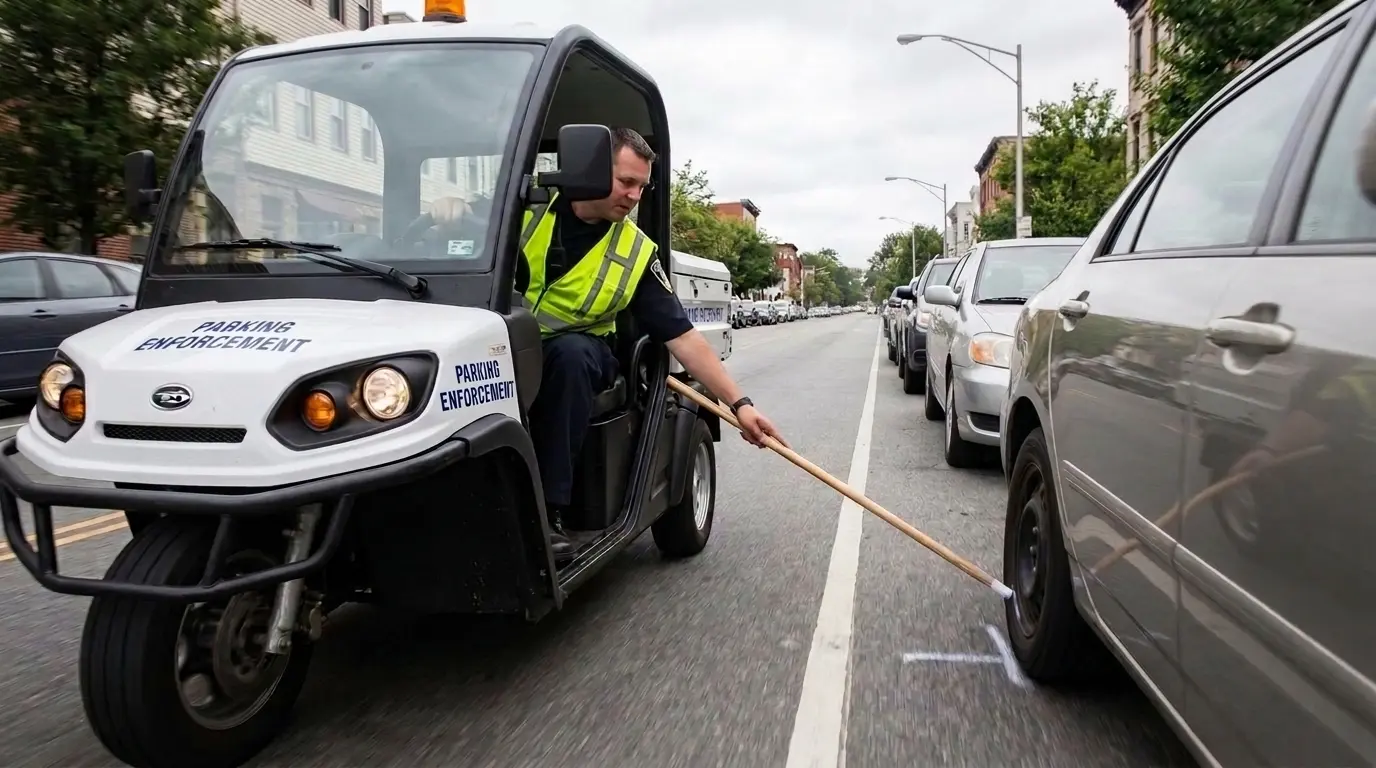
For decades, enforcing a time limit meant an officer crouching at a wheel with a stick of chalk. Digital chalking does the same job with a timestamped electronic record — no mark on the vehicle, no second walk down the block.

What Is Digital Chalking?

Digital chalking is the practice of electronically recording a parked vehicle's characteristics and position, then returning later to check whether the same vehicle is still in the same place. If it is, and the time limit has expired, the vehicle has overstayed. The chalk mark becomes a timestamped record instead of a physical smear on a tire — nothing is applied to the vehicle, and nobody has to touch it.

Is E-Chalking the Same as Digital Chalking?

Yes. E-chalking, electronic chalking, virtual chalking and digital tire chalking all describe the same practice. Digital chalking is the term most used in the parking industry, and it is the one we use here — but if you arrived searching for any of the others, you are in the right place.

The word "chalking" survives because the job has not changed. Only the method has.

Why Did Parking Operators Move Away From Tire Chalking?

It Never Worked Very Well

A chalk mark is a poor instrument. It requires an officer to walk to every vehicle, mark it, and then walk the same route again later — two passes for one enforcement decision. Rain washes it off. Snow buries it. A driver who notices the mark can wipe it away, or simply roll the vehicle forward a foot.

It also does not scale. A single officer on foot can chalk a few hundred vehicles in a shift. A vehicle-mounted system covers the same ground in minutes, and covers it repeatedly.

  • Two physical passes required per enforcement decision
  • Defeated by rain, snow, and a damp cloth
  • No record beyond the officer's notebook
  • Limited to what one person can walk to
Parking enforcement vehicle operating in winter conditions where a chalk mark would be unusable

The Sixth Circuit Tire Chalking Decision

In Taylor v. City of Saginaw (No. 17-2126, amended opinion issued April 25, 2019), the United States Court of Appeals for the Sixth Circuit examined a parking enforcement practice that had gone unchallenged for decades. Between 2014 and 2017, a Saginaw, Michigan parking officer chalked the same driver's tires on fifteen separate occasions and issued a citation each time. She sued the city, arguing that marking her tires without her consent or a warrant was an unreasonable search.

The court held that chalking is a search. Applying the property-based trespass analysis the Supreme Court revived in United States v. Jones — the GPS tracker case — it reasoned that the city had made intentional physical contact with the plaintiff's vehicle in order to obtain information, and that the intrusion counted regardless of how slight it was or whether any damage was done. It went on to reject both exceptions the city offered: the automobile exception, because there was no probable cause, and the community caretaker exception, because the car was lawfully parked and posed no safety risk.

The Sixth Circuit binds Michigan, Ohio, Kentucky and Tennessee, and the decision turned on the particular record before the court. But the reasoning travelled. Operators well outside those four states read it, looked at their own practice of making physical contact with hundreds of private vehicles a day to gather evidence, and began asking what the electronic alternative looked like. Saginaw itself stopped physically chalking in 2019.

Where Digital Chalking Sits

The threshold the court applied was intentional physical contact with the vehicle in order to obtain information. Digital chalking involves none of that — no mark, no touch, nothing applied and nothing removed. The record is a timestamped observation of a vehicle in a public place.

That is a real difference, and it is why the category exists. It is not legal advice, and we are not lawyers. Rules vary by jurisdiction and change; your own counsel is the right place to take a question about what your operation may and may not do.

How Does Digital Chalking Work?

Three things have to be captured for a digital chalk mark to hold up: what the vehicle is, where it was, and when.

Vehicle Features

Usually the license plate, read by an ALPR camera as the enforcement vehicle drives past. Where the plate cannot be read, other characteristics of the vehicle stand in for it.

Position

Near survey-grade GPS fixes where the vehicle was standing. Position is what distinguishes a vehicle that never moved from one that left and came back to the same block.

Time

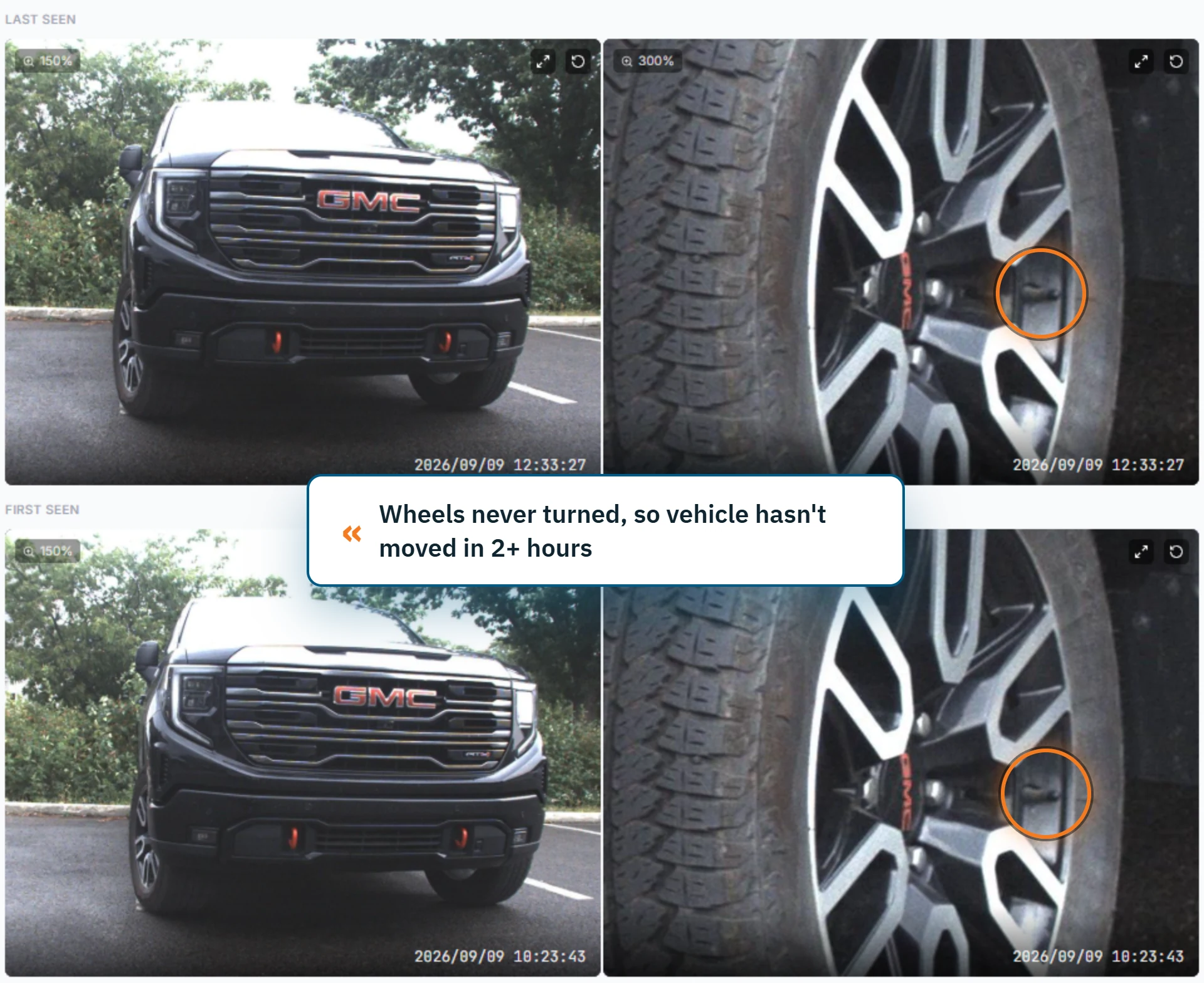
The timestamp on the first observation starts the clock. On a later pass, the system compares what it sees now against what it recorded then and flags anything past the limit.

Does Digital Chalking Need to Read the License Plate?

Not always — and this is where implementations differ from each other.

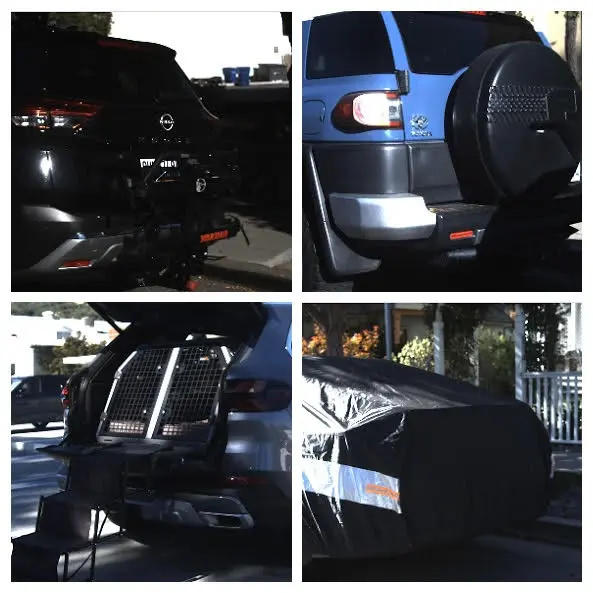
Plate reading is the common method, and for most operations it is enough. But a plate can be covered by snow, obscured by dirt, hidden behind a bike rack, or deliberately concealed by a driver who has worked out what the camera is looking for. A system that can only match on plates loses those vehicles.

autoChalk Mobile matches on the size, shape and colour of the vehicle as well, combined with its recorded position. That makes the digital chalk mark hold even when there is no readable plate at all.

  • Works when a plate is covered by snow or dirt
  • Works when a bike rack or trailer blocks the plate
  • Resistant to deliberate plate concealment
  • First seen and last seen photos for the officer to review movement
Vehicles identified by autoChalk without a visible license plate
Real vehicles matched without a readable plate

Digital Chalking vs. Tire Chalking

  Tire Chalking Digital Chalking
Physical contact with the vehicle Required None
Passes needed per decision Two, on foot Two, while driving
Survives rain and snow
Can be wiped off by the driver Yes No
Evidence for a disputed citation Officer's notes Timestamped record and photographs
Vehicles covered per shift Hundreds Thousands
Works without a readable plate
Who decides to issue the citation Always the officer Always the officer

That last row is the one that matters most. Digital chalking is not automated enforcement. The system narrows thousands of vehicles down to a short list of likely overstays and puts the timestamped evidence in front of an officer — who reviews it and decides whether a citation is warranted. No citation is ever issued without that review.

Which autoChalk Products Do Digital Chalking?

Tannery Creek Systems has been building digital chalking since 2004 — the product is named after it.

autoChalk® Mobile

The full implementation. Cameras, LIDAR and near survey-grade GPS, with patented size, shape and colour matching so a vehicle is recognised whether or not its plate can be read. This is the system for operations where drivers actively try to defeat enforcement, or where snow is a fact of life for five months a year.

autoChalk Mobile

autoChalk® Compact

Digital chalking by plate, in a smaller visual footprint and without LIDAR. Same recognition engine, same geofencing and pay-by-plate verification — the difference is that matching relies on the plate rather than on vehicle characteristics.

autoChalk Compact

autoChalk Mobile roof-mounted ALPR cameras and rear sensor mast on an enforcement vehicle

Does Digital Chalking Record Video of the Street?

No — and this is worth being precise about, because "camera on a vehicle" and "surveillance system" are not the same thing. On autoChalk Mobile, capture is LIDAR-triggered: a frame is requested only when there is a vehicle to evaluate, so there is no continuous video feed and no recording of the street. Records that never become citations are deleted automatically within the configured retention window, and nothing is shared between customers.

How autoChalk Handles ALPR Data

See Digital Chalking in Action

Tannery Creek Systems has been doing this since 2004, for municipalities, downtown authorities, universities and private operators across the United States and Canada. Tell us about your time limits and we will show you what enforcement looks like without a stick of chalk.

Request a Demo

or call 1-855-738-1406