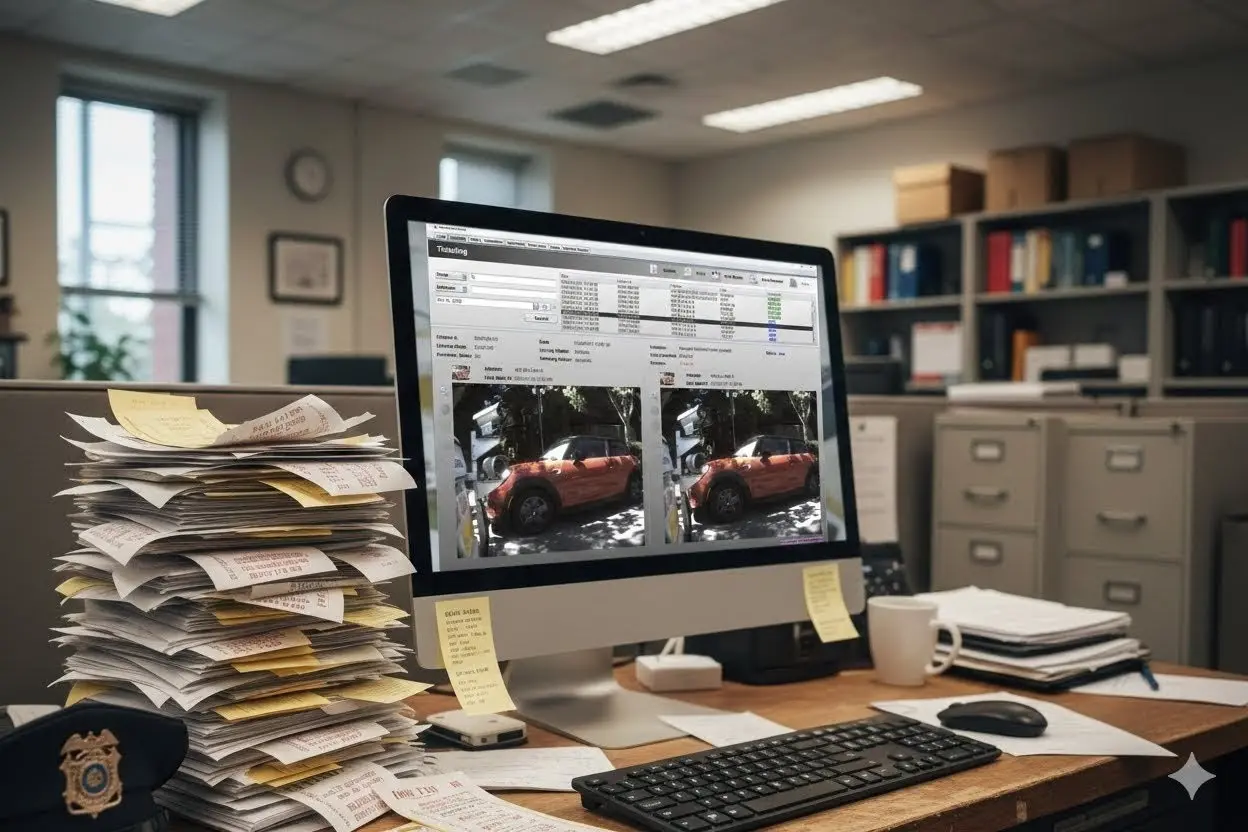
Citation Management
autoChalk® Central
Parking citation management, in your browser. From the moment a plate is read to the day a file closes — one system, one record, one fine calculation. Nothing to install.
Parking citation management, in your browser. From the moment a plate is read to the day a file closes — one system, one record, one fine calculation. Nothing to install.
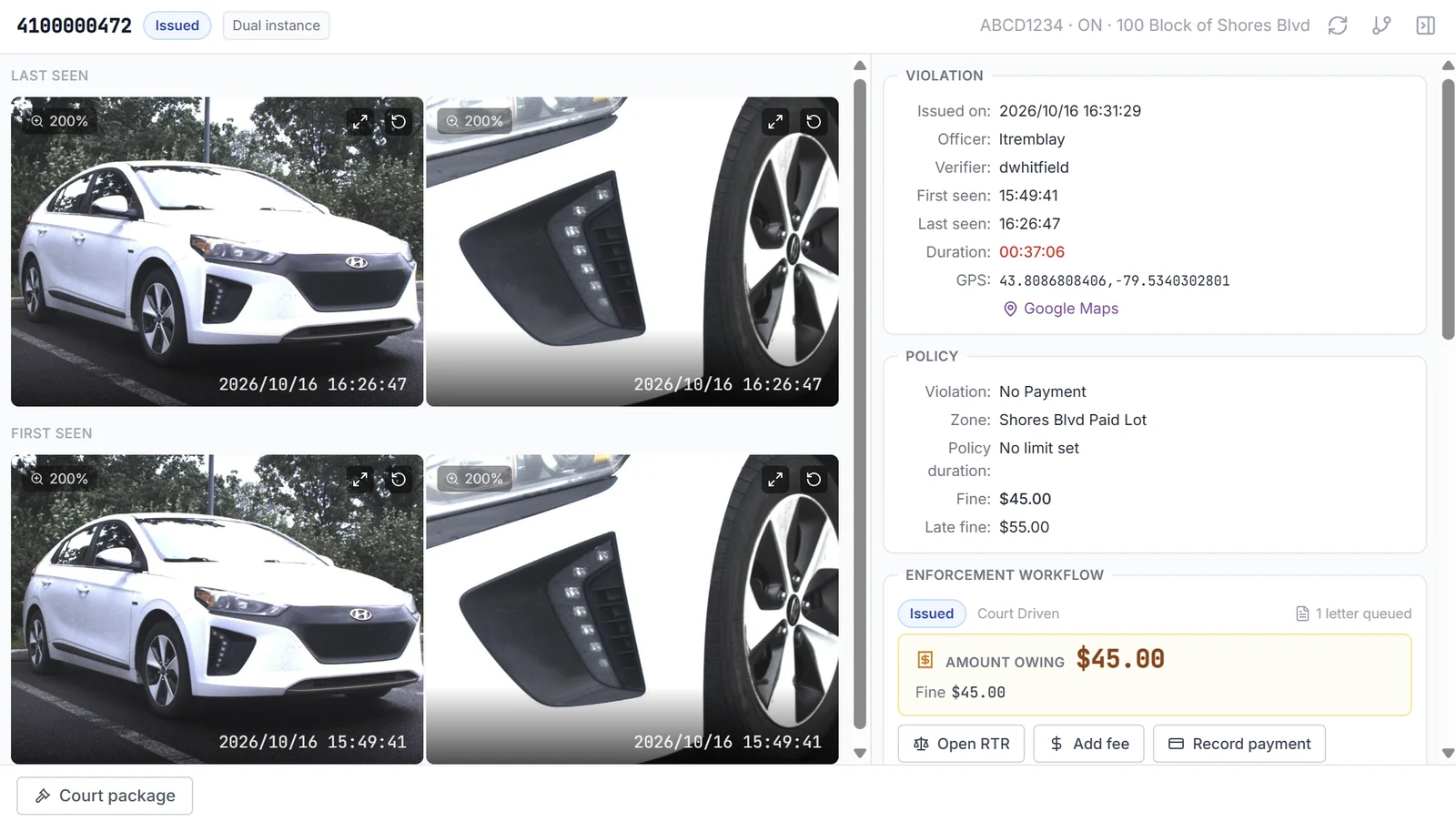
Open a citation and everything about it is on one screen. The plate and the vehicle photos as the officer's system captured them. The policy that was in force on that street at that hour. The fine as it stands today, and every step that got it there.
Served, escalated, letter sent, payment received, court outcome — each step stamped with who did it and when.
When a resident calls to argue, your clerk isn't assembling the story from three systems. It's already assembled.
Traditional enforcement means stopping, writing a ticket, and walking it back to the vehicle. Every one of those stops pushes the rest of the route later — and an officer due back over the same area on a set interval arrives late, with the vehicles at the start of the route waiting longest.
With mailout citations the officer patrols and reads plates, and doesn't stop at all. Central assembles each potential violation with its photo evidence and queues it for review. A clerk approves it, and printing the citation serves it.
We produced our first mailout citations in 2008 and have been refining the workflow with our customers ever since — part of twenty years spent finding ways to get more out of every patrol.
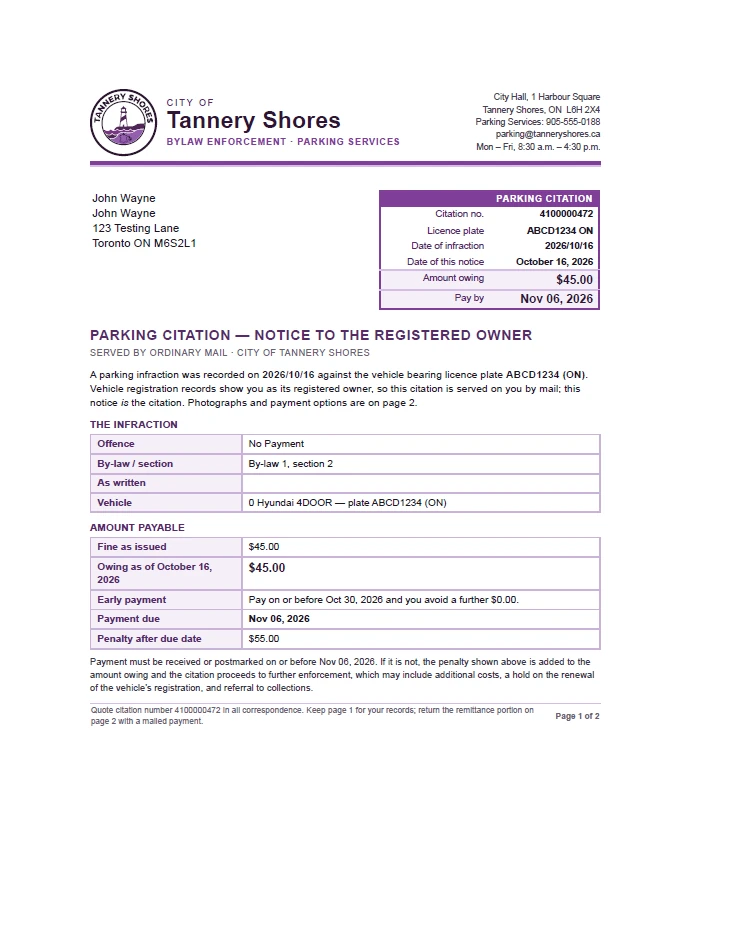
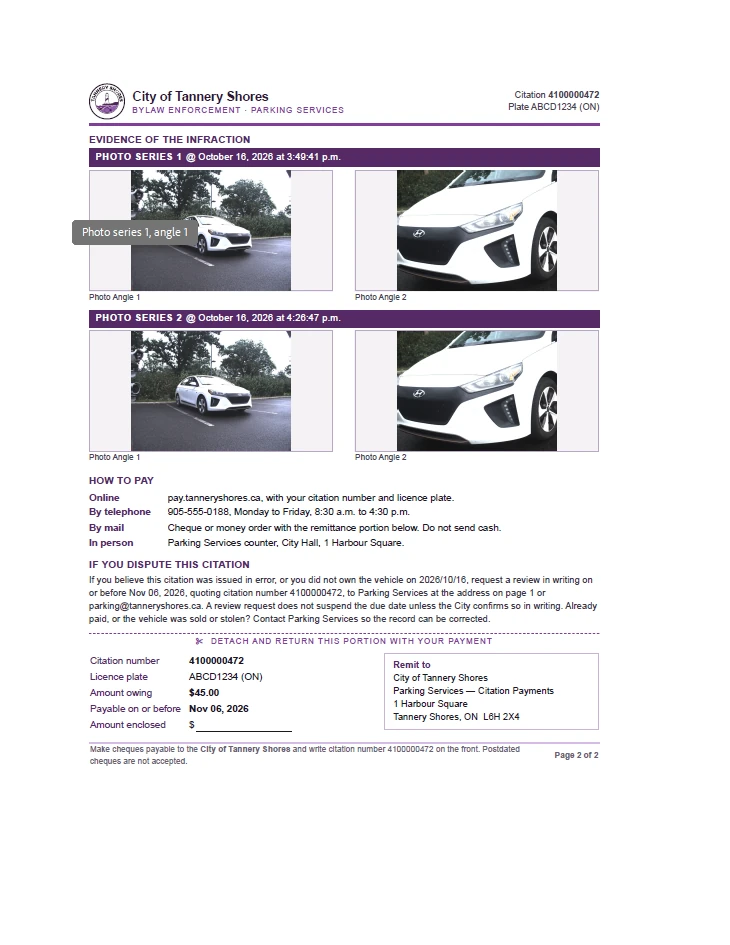
Most citation software stops at issuance. The work starts there.
autoChalk Central runs the whole post-service life of a citation on rules you set: when a fine escalates and by how much, which notice goes out at which stage, and when a file is ready to be acted on. Fees accrue against an append-only ledger, so the amount owing is never in dispute internally — there is one calculation, and every letter, court package and payment screen reads from it.
How you apply pressure is your decision, and Central was built to support more than one answer:
Agencies do not enforce alike, and the ones that switch systems usually do so because the last one only did it one way.
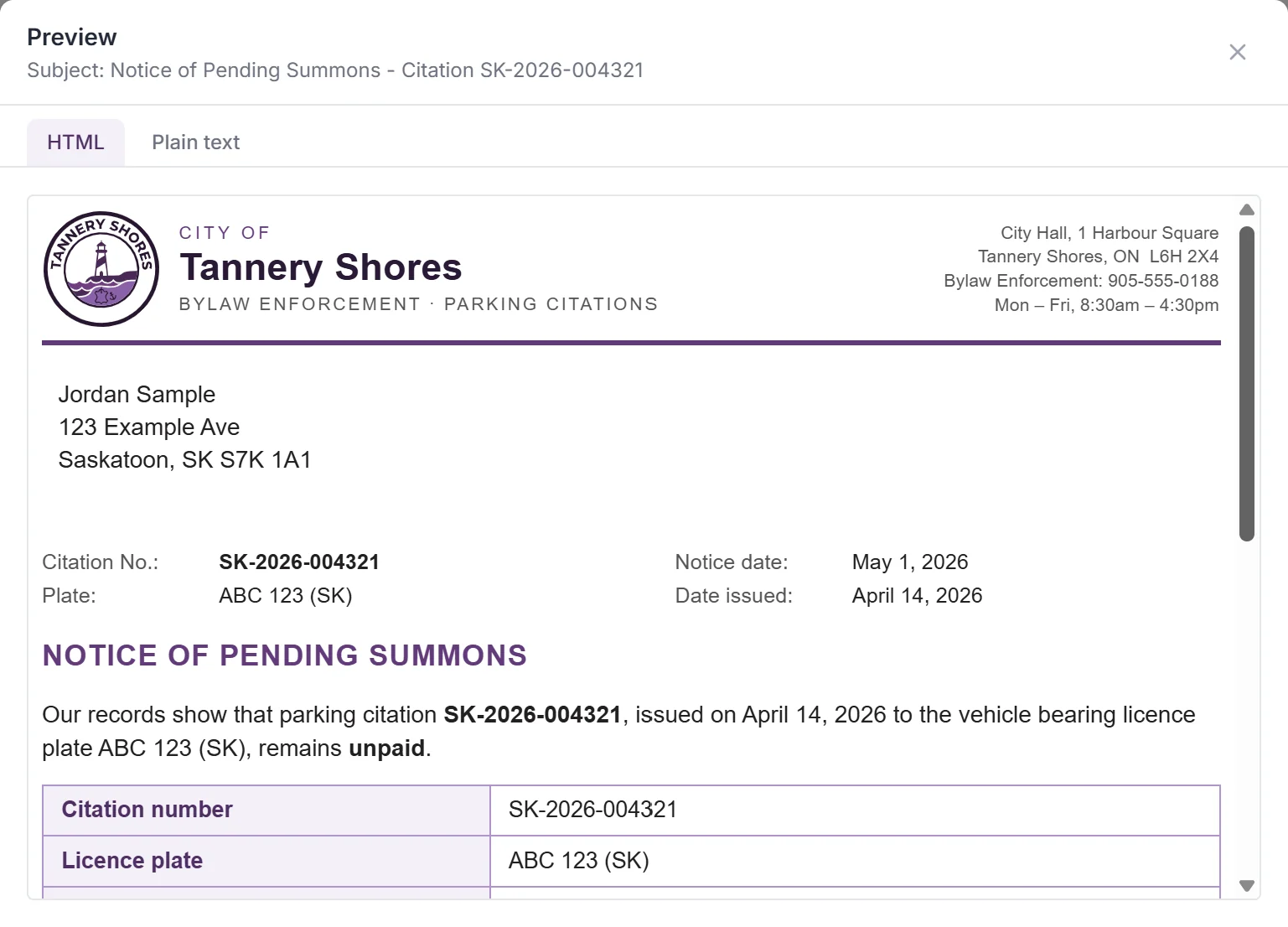
Every read of a citation record is recorded — which user, at what time, which citation and plate. When a resident asks who looked at their record, that is a question with an answer. The recorder fails closed: if the access cannot be recorded, the record is not served.
Each customer gets their own database and their own user pool — not a tenant column in a shared table. There is no shared schema to misconfigure, and nothing spans customers.
Not just the data — the whole autoChalk Central environment. The application, the database and the backups all run in your home country. Canadian agencies are hosted in Canada; United States agencies are hosted in the United States.
Staff sign in through Microsoft Entra ID or Google, or with a username and password if you would rather not federate. Roles decide who can approve, dismiss or administer.
Residential, employee and visitor permits, applied for online and checked against the same plate data your officers already work from.

Full-featured, AI + LIDAR based ALPR system for the most challenging enforcement areas.
Learn More
Handheld ALPR device for on-foot enforcement and verification.
Learn More
Same great AI/ML LPR system for customers who prefer a smaller visual footprint.
Learn More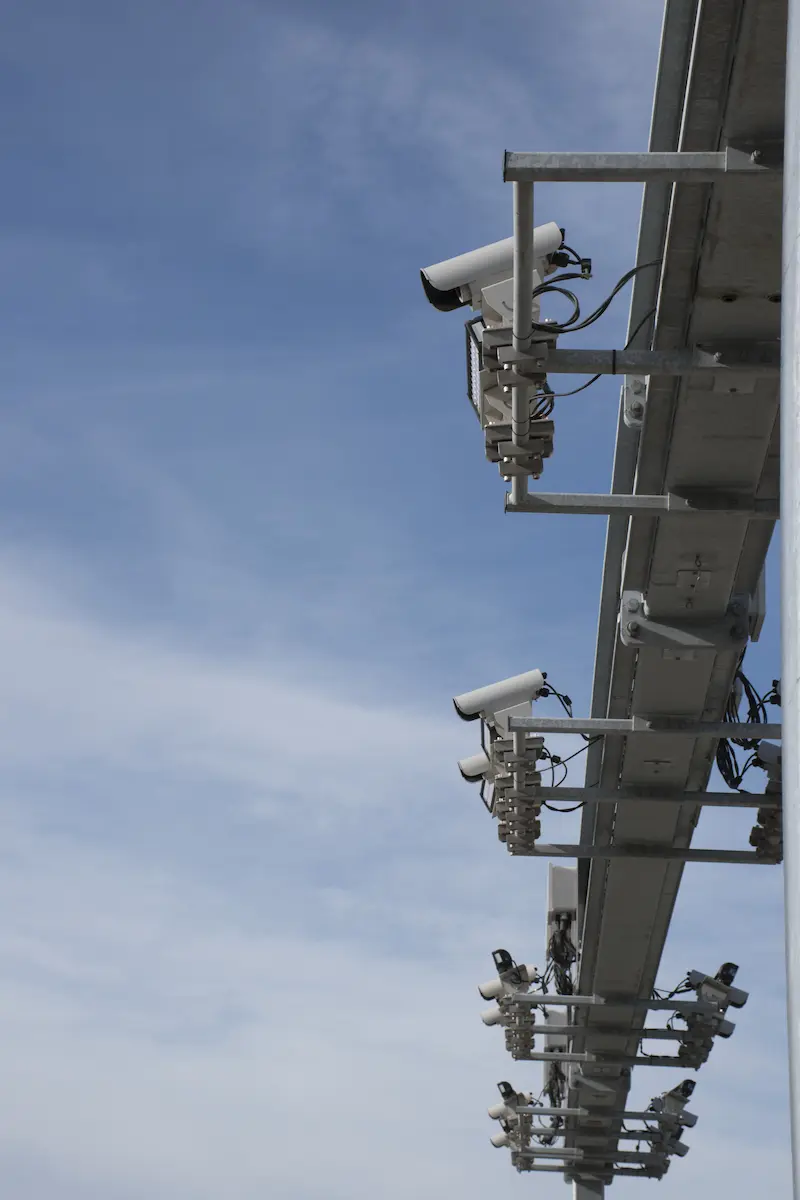
Fixed camera solution designed specifically for parking structures and surface lots.
Learn MoreWe'll set up a working environment with your zones and your fine schedule, and walk your staff through a citation from read to close.
Request a Demoor call 1-855-738-1406